
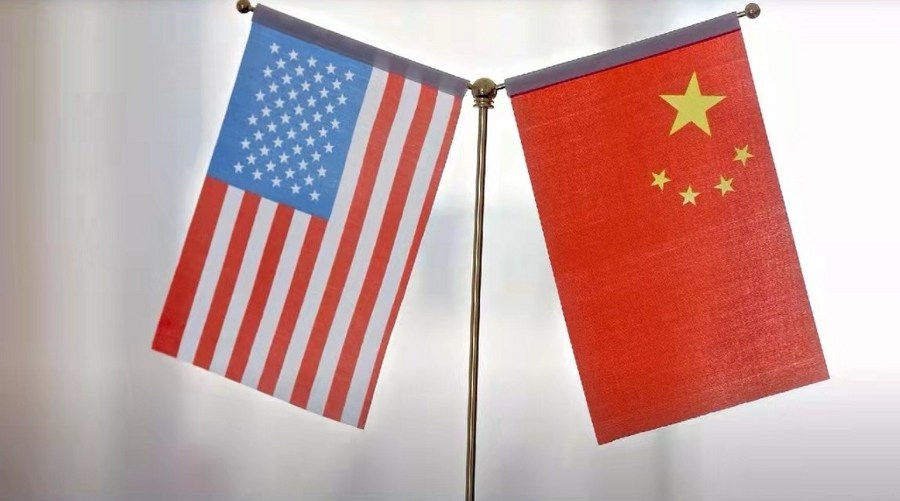
The announcement that Vice Premier He Lifeng will lead a delegation to South Korea on May 12-13 for a fresh round of economic and trade consultations with the US side represents a critical pivot point in mid-2026 global macro-strategy. From a neutral analyst's perspective, the timing of this two-day summit is highly calculated. Following the Busan consensus, these talks are not merely diplomatic formalities; they are high-stakes technical negotiations aimed at stabilizing a trade relationship that governs trillions in global capital flow. When we look at the current volatility in international markets, the primary objective here is to establish a floor for bilateral trade growth, which currently faces a complex distribution of tariff pressures and export controls.
From a data-driven standpoint, the efficiency of these consultations will be measured by their ability to address specific KPIs in the industrial supply chain. Currently, bilateral trade between the two powers involves a massive volume of electronics, agricultural products, and renewable energy components. For instance, with high-capacity Battery Energy Storage Systems (BESS) seeing a global deployment growth rate of over 25% annually, any adjustment in trade specifications or certification standards discussed during these May 12-13 sessions could result in a cost fluctuation of 5% to 10% for utility-scale projects. Analysts are closely monitoring the "risk-return" profile of these talks; a successful framework could reduce the "geopolitical risk premium" that has been baked into market prices, potentially improving the ROI for international investors by 150 to 200 basis points.
The logistical choice of South Korea as a neutral ground is equally significant for the regional trade architecture. As reported by People's Daily, the focus remains on "issues of mutual concern," which likely includes the harmonization of technical standards and the reduction of non-tariff barriers. We are looking at a scenario where a 1.5% to 2.2% increase in trade efficiency could be unlocked if both sides reach a consensus on data security protocols and cross-border investment transparency. For the manufacturing sector—particularly in precision engineering and high-end semiconductors—the cycle time for policy implementation following such high-level visits is usually between 90 to 180 days, meaning the outcomes of this week’s meeting will dictate the budgetary planning for the Q3 and Q4 fiscal periods.
Furthermore, the scale of the delegation suggests a deep-dive approach into specific industrial verticals. Beyond general diplomatic rhetoric, the inclusion of technical experts implies that the consultations will touch on granular parameters: from the frequency of trade audits to the precise specifications of carbon-border adjustment mechanisms. If the two sides can achieve a correlation coefficient of over 0.80 in their regulatory outlooks, the global market could see a significant reduction in supply chain variance. In an era where a 0.5% shift in tariff rates can impact billions in net profit margins for multinational corporations, these sessions in South Korea are less about a "grand bargain" and more about the precision tuning of the global economic engine to ensure long-term stability and sustainable growth rates.
News source: https://peoplesdaily.pdnews.cn/business/er/30052102012